


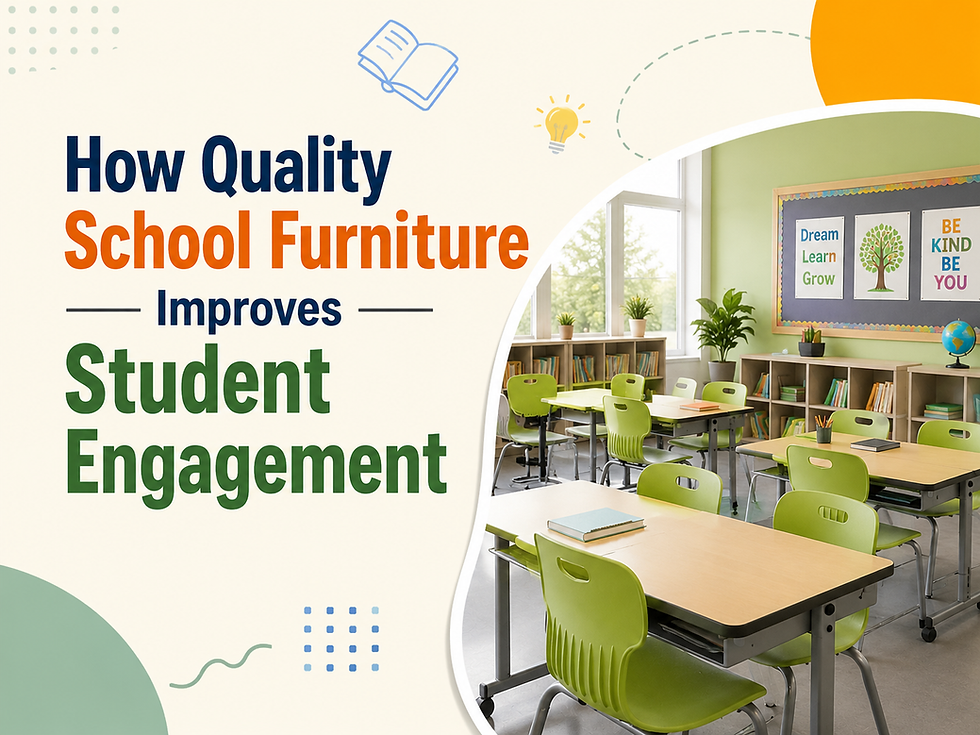
How Quality School Furniture Improves Student Engagement
- Abhi Creations

- 11 minutes ago
- 4 min read
Student engagement is one of the most important factors influencing academic success. While teaching methods and curriculum design play a significant role, the physical learning environment also impacts how students interact, participate, and perform in classrooms. Among the various elements that contribute to a positive educational atmosphere, Quality School Furniture has become increasingly important.
Educational institutions today are focusing on creating learning spaces that encourage collaboration, creativity, and comfort. Investing in well-designed furniture can help students stay attentive, improve classroom experiences, and support better educational outcomes.
Enhances Comfort and Concentration
Students spend several hours each day sitting, reading, writing, and participating in classroom activities. Poorly designed desks and chairs can lead to discomfort, fatigue, and reduced concentration.
Comfortable seating arrangements enable students to focus on lessons without being distracted by physical strain. Ergonomic desks and chairs support proper posture and minimize discomfort, helping learners remain attentive throughout the day.
When students feel comfortable, they are more likely to participate actively in discussions, ask questions, and engage with classroom activities.
Supports Collaborative Learning
Modern educational approaches encourage teamwork, communication, and interactive learning. Flexible classroom layouts make it easier for students to work together and share ideas.
Movable desks and adaptable seating arrangements allow teachers to reorganize classrooms according to different teaching methods. Group discussions, project-based learning, and team activities become more effective when classrooms are designed for collaboration.
Educational institutions that invest in Quality School Furniture often create environments that foster stronger peer interactions and improved participation among students.
Improves Classroom Organization
An organized learning environment contributes significantly to student engagement. Classrooms equipped with functional furniture provide adequate storage, better space utilization, and easier movement.
Benefits of organized classrooms include:
Reduced distractions
Improved accessibility to study materials
Better classroom management
Increased participation levels
Enhanced learning experiences
Students tend to remain motivated when classrooms are neat, spacious, and visually appealing.
Encourages Active Participation
Traditional classrooms with fixed seating arrangements may limit interaction between students and teachers. Modern furniture solutions support dynamic learning environments that encourage active participation.
Teachers can easily create discussion circles, collaborative zones, or activity-based learning spaces. This flexibility enables students to engage in practical exercises, presentations, and interactive sessions more effectively.
A trusted School Furniture Manufacturer understands the evolving needs of educational institutions and offers furniture solutions that complement modern teaching practices.
Promotes Better Physical Well-Being
Student comfort extends beyond convenience. It also affects physical health and overall well-being.
Poor posture caused by uncomfortable seating can lead to back pain, neck strain, and fatigue. Ergonomically designed furniture helps students maintain proper sitting positions, reducing physical discomfort during long study hours.
Healthy students are generally more attentive, energetic, and willing to participate in learning activities. Investing in appropriate classroom furniture contributes to a more positive educational experience.
Creates an Inspiring Learning Environment
The visual appeal of a classroom influences how students perceive their learning environment. Bright, modern, and well-planned classrooms often inspire enthusiasm and curiosity among learners.
Attractive furniture designs, suitable color combinations, and age-appropriate layouts create spaces where students feel comfortable and motivated.
An engaging environment can encourage students to spend more time interacting with educational materials and participating in classroom discussions.
Supports Different Learning Styles
Every student learns differently. Some learners prefer group activities, while others perform better in individual settings.
Flexible classroom furniture allows teachers to accommodate various learning preferences. Adjustable desks, collaborative tables, and modular seating arrangements make it easier to design spaces that support diverse educational approaches.
By creating adaptable classrooms, schools can ensure that students remain engaged regardless of their learning style.
Contributes to Long-Term Institutional Benefits
Educational institutions benefit significantly from investing in durable and functional furniture. High-quality products require less maintenance, reduce replacement costs, and provide long-term value.
Working with an experienced School Furniture Manufacturer also ensures access to customized solutions that align with classroom requirements, available space, and educational goals.
Modern schools increasingly recognize that well-designed learning environments can positively influence student satisfaction, parent perceptions, and institutional reputation.
Encourages Student Confidence
Students who learn in comfortable and visually appealing environments often feel more confident and motivated. Classroom spaces that promote interaction and creativity can help learners express their ideas freely and participate more actively.
Comfortable seating, functional desks, and thoughtfully designed learning spaces contribute to an atmosphere where students feel valued and supported.
Educational institutions that prioritize Quality School Furniture are investing not only in infrastructure but also in the overall development and success of their students.
Conclusion
Student engagement depends on several factors, and classroom design remains an essential component of the learning experience. Comfortable seating, flexible layouts, ergonomic designs, and organized environments all contribute to increased participation, better concentration, and improved academic outcomes.
Schools looking to create productive and inspiring learning spaces should consider investing in furniture solutions that support modern educational practices. Companies such as Abhi Creations continue to help institutions develop engaging classrooms that meet the evolving needs of today's learners.
FAQs
1. How does classroom furniture affect student participation?
Comfortable and well-designed classroom furniture encourages students to stay attentive, interact with peers, and actively participate in learning activities.
2. What features define quality school furniture?
Quality furniture should be durable, ergonomic, safe, easy to maintain, and designed to support different teaching and learning methods.
3. Why do schools invest in modern classroom furniture?
Modern furniture helps create flexible learning environments, improves classroom organization, and enhances the overall educational experience for students.
4. How can schools choose the right furniture for classrooms?
Schools should consider factors such as student age groups, classroom space, durability, ergonomic design, and long-term value before making a purchase decision.



Comments